The Canary Islands calima is a meteorological phenomenon that arouses both curiosity and concern among many tourists, and with which the residents of the islands have to live. The calima weather phenomenon is common in the Canary Islands and can have a significant impact on people’s daily lives and health. In this article, we will explore in detail what calima is, why it appears, how long it usually lasts, where it is most frequent and what to do during a calima if you are visiting the Canaries. 🌍
🌪️ What is a ‘calima’ in English?
The so-called in Spanish calima is haze, a meteorological phenomenon that consists of the presence of particles of dust and sand suspended in the atmosphere. These particles, which can be of natural origin (type A) or anthropogenic (caused by pollution or fires, the so-called type B), reduce visibility and give the sky a hazy or even reddish appearance.
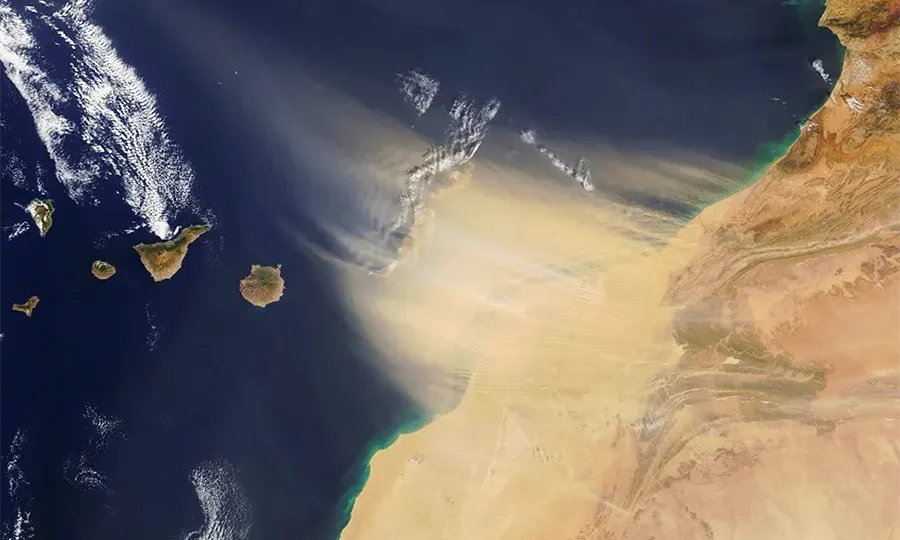
In the particular case of the Canary Islands, the calima is only referred to haze caused by dust coming mainly from the Sahara Desert and carried by the trade winds. 🏜️
🌬️ How is the Canary Islands’ calima formed?
As we explained before, the formation of the calima in the Canary Islands is directly related to the sandstorms in the Sahara Desert and the trade winds. Sandstorms and prevailing easterly, southerly or south-easterly winds can carry particles of dust and sand across the Atlantic Ocean to the Canary Islands. This process can last several days, depending on the strength of the winds and the distance travelled. 🌪️
⏳ How long does calima last?
The duration of the Saharan dust storms in the Canary Islands can vary, but generally lasts between 2 and 5 days. In some cases, especially when the weather conditions are favourable, the dust can persist for up to a week; however, it is more common for visibility to improve and the air to clear after just 2-3 days. 📅
🌍 Why are dust storms so common in the Canary Islands?
The calima is frequent in the Canary Islands due to the proximity of the archipelago to the African continent and the Sahara Desert. The trade winds, which blow from the northeast most of the year, easily transport dust and sand particles from the Sahara to the islands. In addition, the mountainous topography of the islands, especially in areas such as Gran Canaria and Tenerife, can favour the accumulation of these particles in the air. 🏝️
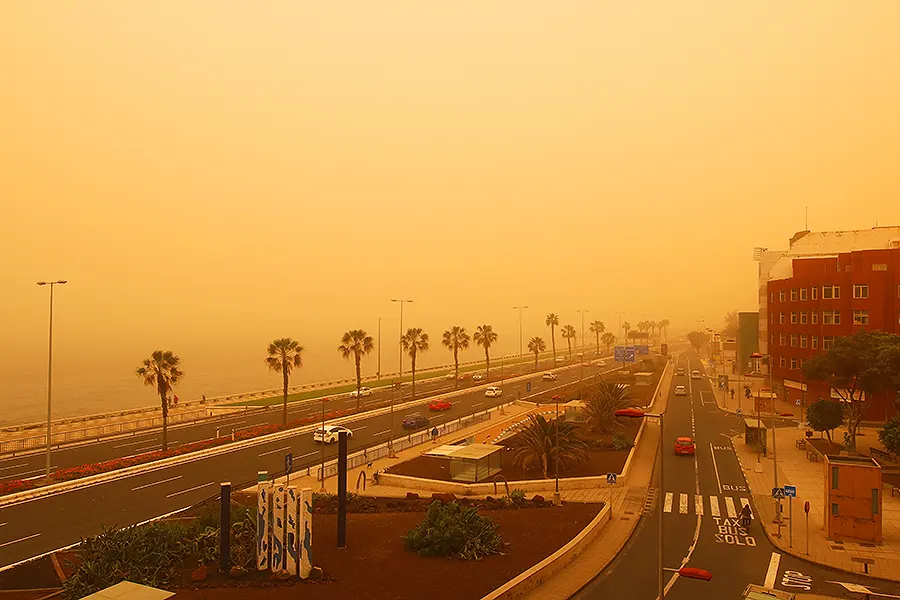
🗺️ Where is calima more frequent in the Canary Islands?
The easternmost islands, such as Lanzarote and Fuerteventura, are usually the most affected due to their proximity to the African continent. However, it should be made clear that this phenomenon can affect all the islands. In fact, calima in Gran Canaria and calima in Tenerife are also common, especially in coastal and lower altitude areas. 🌋
✈️ Can planes fly in a calima?
Well, normally yes, but on some occasions, the strong presence of calima in Lanzarote has even forced the diversion of several flights to other airports. In 2020, a powerful calima in Fuerteventura even forced the cancellation of Carnival celebrations in the island’s capital for public health reasons.
📅 What time of year are dust storms most common?
Calima is more common in the Canary Islands during the months of summer and autumn, although it can occur at any time of the year. The months of July, August and September are the most prone to experiencing this phenomenon, coinciding with the Sahara sandstorm season.
A very interesting research published in 2024 revealed that, since 1980, the islands have recorded 483 episodes of significant calima, with an average of about 24 days a year with calima, and an average duration for each of these events of 1.8 days.
Don’t forget that it is also possible to find up-to-date information on the weather conditions and the calima in the Canary Islands today through websites such as AEMET (Spanish State Meteorological Agency). 🌞

⚠️ What are the side effects of calima?
Calima, especially when it reaches a certain intensity, can be dangerous to health, especially for people with respiratory problems such as asthma or allergies. Airborne dust particles can irritate the respiratory tract and aggravate pre-existing conditions.
The main symptoms of the calima in people are:
- irritation of the eyes and nose
- coughs and phlegm
- respiratory problems
- chest pain
- sore or itchy throat
- headache
- tiredness
- feeling of suffocation
- palpitations
In addition to these health problems, it should be borne in mind that reduced visibility can affect driving and other outdoor activities during the most severe episodes of calima. 🏥
🤔 Stop calima: key tips to handle Canary Islands weather
When this phenomenon occurs, specially when the there is a calima weather warning in the Canary Islands, it is important to take several precautions in order to protect your health and minimise the adverse effects of the phenomenon. Some recommendations include:
- Avoid outdoor activities, especially for people with respiratory problems.
- Use masks to reduce the inhalation of dust particles, especially for people with asthma, allergies, etc.
- Keep windows closed to prevent dust from entering homes.
- Drink plenty of water to stay hydrated.
- Exercise extreme caution when driving if there is reduced visibility (in the most intense cases of calima)
- See a doctor if you feel pain or have breathing problems or any other.
- Follow the recommendations on the Canary Islands calima weather from the AEMET (Spanish State Meteorological Agency) and other local authorities.
Although in most cases the Canary Islands calima is a relatively harmless meteorological phenomenon, when it becomes intense it is necessary to pay attention and take certain precautions, especially in the case of the elderly, children and people with previous respiratory problems. Nevertheless, taking the appropriate measures is enough in the great majority of cases to minimise its effects. Therefore, if you plan to visit the islands, being informed about the calima forecast for the Canary Islands, and following the recommendations of the authorities, will allow you to enjoy your stay safely and peacefully. ☺️🌴