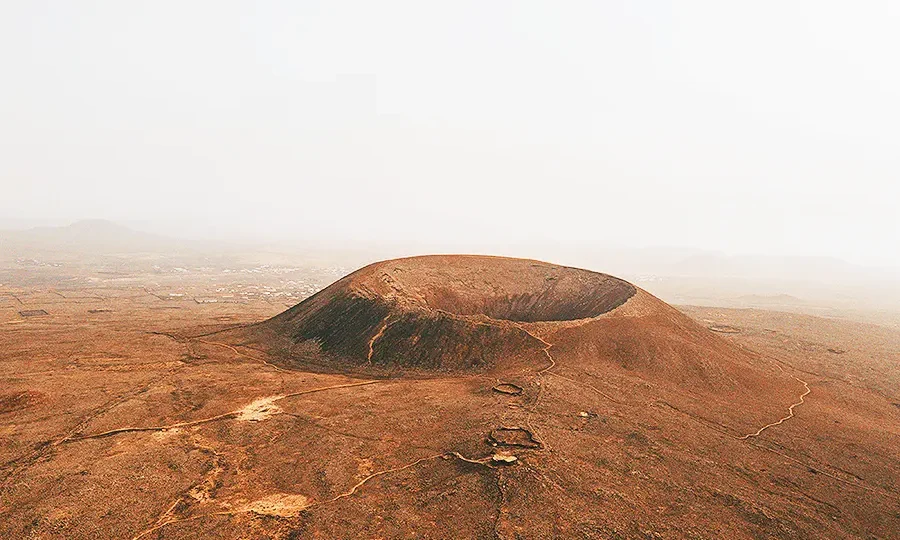
Calderon Hondo volcano is one of the most impressive natural treasures on Fuerteventura. With its imposing crater and panoramic views, this volcano has become a must-see for hiking and nature lovers.
Located in the municipality of La Oliva, the Calderón Hondo volcano offers a unique experience for those who wish to explore the volcanic geology of the Canary Islands. In this article, we tell you everything you need to know about this sleeping giant: from its location and main characteristics, to what else you should visit in the surrounding area. Get ready for an unforgettable adventure! 🥾
🌍 Where is Calderon Hondo?
Calderon Hondo is located in the north of Fuerteventura, specifically in the municipality of La Oliva. It is located 278 metres above sea level, and its geographical position makes it an exceptional vantage point from where you can enjoy spectacular views of the island of Lanzarote, the island of Lobos, and on clear days, even the Corralejo Dunes.
🌋 When did Calderon Hondo last erupt?
The Calderon Hondo volcano is one of the most representative examples of recent volcanic activity in Fuerteventura. It is estimated that Calderon Hondo’s last eruption occurred some 50,000 years ago, at the end of the geological period known as the Pleistocene. Although it is currently inactive, its well-preserved crater and conical structure are an impressive testimony of the volcanoes that shaped the Canary Islands. ⛰️
📷 What makes this volcano in Fuerteventura so special?
What makes the Calderón Hondo unique is its crater, which is perfectly preserved, with a diameter of about 100 metres and a depth of 70 metres. In addition, its relatively easy access makes it an ideal option for everyone, from families to experienced hikers.
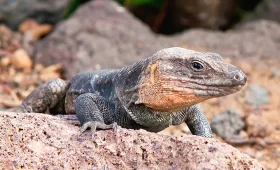
It should also be noted that from the top you can enjoy a panoramic view that includes the north of Fuerteventura and the Atlantic Ocean with the island of Lanzarote, as well as other volcanic cones nearby such as Las Calderas or the Bayuyo volcanoes. It is also a perfect place to observe the local wildlife, such as goats, crows or even Houbara bustards, a species of great bustard native to Fuerteventura that is in danger of extinction. 🦅
🚶 How do I get to the Calderon Hondo volcano?
There are several options for getting to the volcano. Calderon Hondo is near Lajares, so the most popular route on foot is 5 km long and starts in this village, located about 15 minutes’ drive from Corralejo. From there, you can follow a well-signposted path that leads directly to the volcano from the southwest, circling the crater. By the way, if you are thinking about how to get to the Calderon Hondo volcano, it is important to wear suitable footwear, take water and sunscreen, as the terrain is rocky and the weather can be quite sunny. 🌞
Another option is to take a route by car located right before arriving at Lajares from Corralejo, which takes us along a dirt track to a quarry; from there the road turns off to the left and, after a short climb, takes us to the Calderon Hondo parking for visitors, from where a well-marked stone path leads to the crater. The path is suitable for people with average physical fitness. 🚗
⏱️ How long does it take the Calderon Hondo hike?
The circular walking route to the Calderon Hondo volcano is easy and takes approximately 1 hour and a half round trip, depending on the pace of each person. The route has an elevation gain of 160 metres, and once you reach the foot of the crater, the ascent is quite steep but takes no more than 5 minutes.
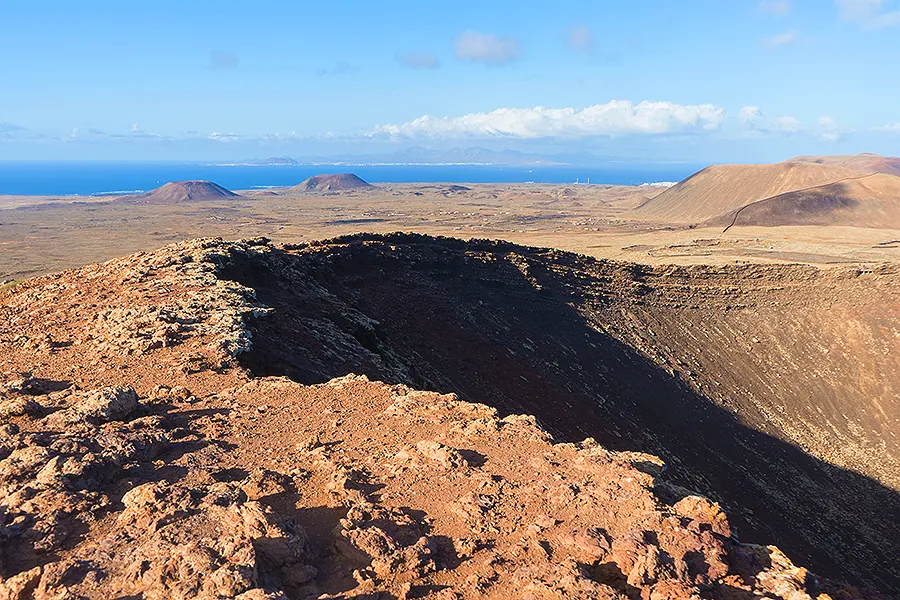
Although the final ascent may require some effort if we are not in shape, the incredible views from the crater make each step worthwhile. So, in addition to comfortable shoes and water… Don’t forget to bring your mobile phone or your camera! 📸
🏝️ What other interesting places can I visit near the volcano?
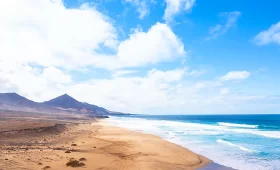
The northern part of Fuerteventura offers tourist attractions that you can’t afford to miss. A few kilometres away is the Dunes of Corralejo Natural Park, famous for its beautiful dune landscapes and beaches with crystal-clear waters.
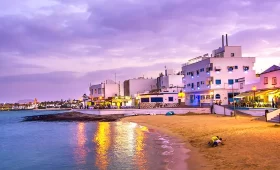
Beforehand, you can visit the village of Lajares, known for its crafts and relaxed atmosphere; and if you like surfing, be sure to stop by El Cotillo, a town on the west coast with beautiful beaches and some of the best waves on the island. 🏄
Another nearby point of interest is the Mountain of Tindaya, a sacred place for the Majorero aborigines, located next to the town of the same name. And if you are a volcanoes fan, in the nearby village of Villaverde you have the Volcán de la Arena (“Sand Volcano”) – the youngest volcano in Fuerteventura, which erupted 10,000 years ago – and the Escanfraga, the highest volcanic cone on the island. 🗻
Indeed, let’s not forget that Fuerteventura, like the rest of the Canary Islands, is an island that emerged millions of years ago from volcanic eruptions, so all the ‘mountains’ we see there are, in fact, ancient volcanoes that are now extinct. We hope that this information about the Calderon Hondo volcano has been useful for planning your visit to this beautiful place, and we invite you to let yourself be surprised by this impressive corner of the Canary Islands. Enjoy your adventure in Fuerteventura! 🌴