Mojo picon is one of the most representative culinary jewels of the Canary Islands. With its intense and spicy flavour, this sauce is famous not only in the archipelago, but also all over the world. In this article we will explore the characteristics of mojo picón, its history, how it is used in Canarian gastronomy and, of course, how to prepare this fabulous sauce at home. If you are planning to visit the Canary Islands, you can’t miss this delicious sauce that is an essential part of its gastronomic culture.
🥫 Characteristics of mojo picon
Mojo picón is characterised by its strong and spicy flavour, which comes from ingredients such as pepper, garlic and cumin. Its intense red colour is unmistakable and is due to the use of red peppers and, in some cases, chilli peppers. In fact, this sauce can vary in spiciness depending on the amount and type of peppers used.
The texture of mojo picón is smooth but slightly grainy, which makes it perfect to accompany a wide variety of dishes. Its versatility is one of its greatest virtues, as it can enhance the flavour of meat, fish, potatoes and much more. The mojo rojo – as mojo picón is also known – is however only a specific version of a sauce that, as you will see below, has many variants.
🍽️ How many types of mojo sauce are there?
Indeed, mojo picon is only one of the many varieties of mojo that exist in the Canary Islands. Let’s say that mojos can be classified, mainly, into red mojo (mojo rojo) and green mojo (mojo verde).
Mojo rojo is made from red peppers, garlic, cumin, paprika and sometimes chilli peppers. This variant is very spicy and is ideal with grilled meats, papas arrugadas (wrinkled potatoes) and fish.
On the other hand, the mojo verde sauce is prepared with coriander or parsley, garlic, cumin and olive oil, which gives it a fresh and herbaceous flavour. Mojo verde is a common accompaniment to seafood and fish, being a tasty and less spicy option than its red counterpart.
In addition to these two main types or families, there are other regional and inter-island variants of mojo that include additional ingredients such as almonds, breadcrumbs or tomatoes, each bringing its own unique nuance to the sauce.

What is Canarian mojo sauce used for?
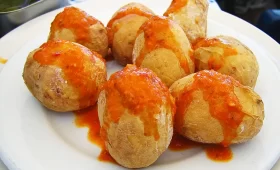
Mojo picon is a real all-rounder in Canarian cuisine. One of its best known uses, which we have already mentioned, is as Canarian potatoes with mojo (the famous papas arrugadas), an emblematic dish of the Canary Islands, which are cooked in salted water, served with the potato skin on and accompanied with mojo picón.
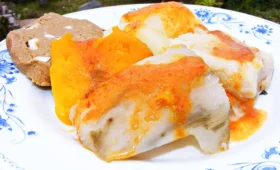
In addition, mojo picon is ideal for seasoning grilled meats, especially pork and chicken, giving them an additional flavour and a touch of spiciness that is highly appreciated in Canarian gastronomy. It is also used as a sauce for fish and seafood, providing an herbaceous touch that contrasts with the taste of the sea.
Another popular way to enjoy mojo picón is as dipping sauce, accompanying breads and cheeses. In short, its versatility makes it an essential ingredient in Canarian cuisine, and its ability to enhance the flavour of various dishes makes this sauce irresistible to any good food lover.
📜 Origin and history of the mojo sauce of Canary Islands
The origin of Canarian mojo dates back to the time of the first European settlers in the islands. The word ‘mojo’ comes from the Portuguese ‘molho’, which means sauce, reflecting the cultural influences that existed in the region at that time.
The Canary Islands, situated at a crossroads of maritime routes between Europe, Africa and America, have always been a mixing hub of cultures. This cultural mix has had a significant influence on Canarian cuisine. The incipient trade with America and the arrival of spices transported across the ocean by ships that landed on the islands, ended up influencing the local cuisine and creating unique recipes.
Mojo is in fact a fusion that combines ingredients and techniques brought by European settlers with local products. Over time, mojo has become a symbol of Canarian identity, present in recipes, dishes, celebrations, festivals and everyday life on the islands.
👨🍳 Canary Islands mojo rojo sauce recipe
For those of you who want to bring a piece of the Canary Islands to your kitchen, here is the recipe of mojo rojo sauce or mojo picón (be careful, it’s very spicy!):
Ingredients:
- 2 dried red peppers (ñoras or choricero peppers can be used)
- 3 cloves of garlic
- 1 teaspoon of cumin seeds
- 1 teaspoon of sweet paprika
- 1 chilli pepper (optional, for an even hotter touch)
- 100 ml of extra virgin olive oil
- 50 ml of wine vinegar
- Salt
How to prepare:
- Soak the dried peppers in hot water for about 15 minutes until soft. Remove the seeds and skin.
- In a mortar and pestle, crush the peeled garlic with the salt and cumin to a paste.
- Add the peppers and continue pounding until a homogeneous mixture is formed.
- Add the paprika and chilli and continue mixing.
- Add the vinegar and oil little by little while continuing to stir until you obtain a thick, uniform sauce.
- Add salt if necessary, and serve at the table.
This freshly made mojo picon can be stored in a glass jar in the refrigerator for several weeks, allowing you to enjoy its authentic flavour at any time.

🌿 Mojo verde recipe
If spicy food is not your favourite and you prefer a milder flavour of mojo, don’t worry because here you also have the recipe of mojo verde:
Ingredients:
- 1 bunch of fresh coriander (you can use parsley if you prefer a milder flavour)
- 3 cloves of garlic
- 1 teaspoon of cumin seeds
- 150 ml of extra virgin olive oil
- 50 ml of wine vinegar
- Salt
- 1 small green pepper (optional, to intensify colour and flavour)
- A few drops of water (if necessary to adjust consistency)
How to prepare:
- Wash the coriander (or parsley) well and remove the thickest stems. Peel the garlic cloves.
- In a mortar and pestle, crush the garlic with the salt and cumin to a smooth paste. If you prefer, you can use a food processor for this step.
- Add the coriander leaves (or parsley) and green pepper (if you choose to use it) to the mortar or food processor. Grind well until a uniform green paste forms.
- Add the vinegar and olive oil a little at a time as you continue to mash or process the mixture. You should get a thick, well-emulsified sauce. If the sauce is too thick, you can add a few drops of water to adjust it to the desired consistency.
- Taste the sauce and add salt if necessary. The balance between oil, vinegar and salt is key to a good mojo verde.
- Pour the mojo verde into a bowl and let it sit for a few minutes before serving, to allow the flavours to integrate well. This sauce is perfect with fish, seafood, wrinkled potatoes and grilled vegetables.

💪 Health benefits of mojo sauce
In addition to its virtues for enhancing the flavour of dishes, mojo picón also has several health benefits. Red peppers, one of its main ingredients, are rich in vitamin C and antioxidants, which help strengthen the immune system and fight free radicals. Garlic, another key component, is known for its antibacterial and anti-inflammatory properties, as well as its ability to improve cardiovascular health.
Cumin, present in both red and green mojo, is a spice that aids digestion and has antioxidant properties. Extra virgin olive oil is also a healthy source of monounsaturated fats that benefit the heart and reduce inflammation. We can say, therefore, that adding mojo to your dishes will not only improve the flavour of your food, but will also provide essential nutrients and compounds beneficial to your health.
As you can see, mojo picon is much more than a sauce; it is an indivisible part of the culture and gastronomy of the Canary Islands. With its distinctive flavour, this sauce has earned a special place on the tables of Canarians’ cuisine. If you plan to visit the so-called Islas Afortunadas (Lucky Islands), be sure to try mojo in its various forms, and don’t forget to take home a few jars as a souvenir, or even dare to prepare it yourself with the recipes we’ve given you. Enjoy! 😊🥣